Monday, February 21, 2011

Rome, Italy

View from Castel Saint'Angelo

On the Spanish Steps
Spanish Steps

ROMA! With every trip I take, I fall more and more in love with all that Italy has to offer. Early Friday morning we met our group and traveled via coach bus to Rome. Upon arrival we immediately set off on a walking tour. With the help of a guide, we walked down the large cobble stoned streets soaking up the warmth of the 60-degree weather. The tour began with a trip through the historical center. While wandering down the main streets we came upon Piazza di Spagna – the famous Spanish Steps. Climbing the stairs and reaching the top offers a birds eye view of the bustling city center of Rome. I popped into the church of Trinita dei Monti that sits atop the hill and witnessed a few moments of a communion ceremony! After leaving the busy streets crowded with cars and people we headed towards the Pantheon. Interestingly we were told that a layer of scaffolding that once covered the outside of the Pantheon had just recently been removed (we were lucky to be able to take photos not tainted by the construction!). This building was commissioned as a temple to all gods of Ancient Rome and was later rebuilt by Emperor Hadrian. The name, Pantheon which means “to every god”, is speculated to come from the many statues of gods placed around the building, or from the resemblance of the dome to the heavens. The building is circular with three ranks of huge granite columns and a concrete dome. The interior is covered with decorative marble facing and the exterior by stone and stucco. After grabbing a cone of gelato, we sat on the steps in the square in front of the Pantheon and enjoyed people watching and listening to the street performers.
            Next stop – Trevi Fountain! This area was bursting with activity and crowds of eager tourists. The Fontana di Trevi or Trevi Fountain is the most famous and arguably the most beautiful fountain in all of Rome. The central figure of the fountain is Neptune, god of the sea. Of course my roommates and I took part in the typical action of tossing a coin into the fountain! Legend has it you will return to Rome if you throw a coin into the water (I hope I am lucky enough to come back one day!). Following the Trevi Fountain visit, we went to Piazza Navona, a large and lively square featuring three magnificent fountains and the baroque church of Sant’Agnese in Agone. We sat near a beautiful flowing fountain just to enjoy the warmth of the sun’s rays and snap some photos. The Piazza Navona is situated in the historic center of Rome, west of the Pantheon. It is one of Rome’s liveliest squares, with many outdoor cafes and restaurants in the neighborhood. Interestingly, the square is built on the former Domitian’s stadium, built by emperor Domitian. Hence why the piazza is in a long, oval shape.
            Later on that night I was able to meet up with a large group of friends that I study with back at UVM. We all went to dinner at a quaint little restaurant where large amounts of wine, pasta, and bread were consumed. It was great to catch up with my friends and enjoy a night in Rome together.
St. Peter's Basilica
            
The next morning we grabbed some breakfast at the hotel and headed off to a guided visit of Castel Saint’Angelo. The Castel is an imposing building on the right bank of the Tiber River and has had a turbulent history. During its many years of existence, the building functioned first as a mausoleum, then became part of the city wall and later turned into a fortress before it functioned as a papal residence and finally as a barracks and military prison. Currently, it serves as a national museum. The interior of the fortress is decorated with many frescoes and a spiral corridor leading down to the original part of the mausoleum. At the top of the fortress you can look out over the panoramic terrace and take in the breathtaking view of the city. The last part of the guided tour ended with a trip to St. Peters Basilica. St. Peter’s Basilica is a major basilica in Vatican City, an enclave of Rome. St. Peter’s Sqaure (Piazza San Pietro) was designed by Bernini and built between 1656 and 1667. The basilica itself is the burial site of its namesake Saint Peter. In the square, there are two fountains and a tall obelisk stands in the center. The building in particular is truly impressive. The largest church in the world, it has a large dome and an interior, which includes 45 altars decorated by many famous artists. Some of the most important works in the church are the Pieta by Michelangelo, the papal altar by Bernini, and the Monument to the Stuarts by Canova. Having the opportunity to see the magnificent church and actually visit one of the holiest Catholic sites was truly an experience I will never forget.
Borghese Gardens
            After the amazing time spent in St. Peters Church a few of my friends and I headed towards the Borghese Gardens to relax and wander through the grounds. Stretching from above Piazza del Popolo to the top of Via Veneto, Villa Borghese remains a green and pleasant space to escape from the bustling city of Rome. There are museums, a theatre, a park, a lake, rollerblade space as well as numerous fountains dotted throughout. Villa Borghese remains one of Rome’s abiding pleasures for Romans and visitors alike. The peace, graceful trees, and panoramic views of the city made it a perfect spot for a relaxing afternoon.
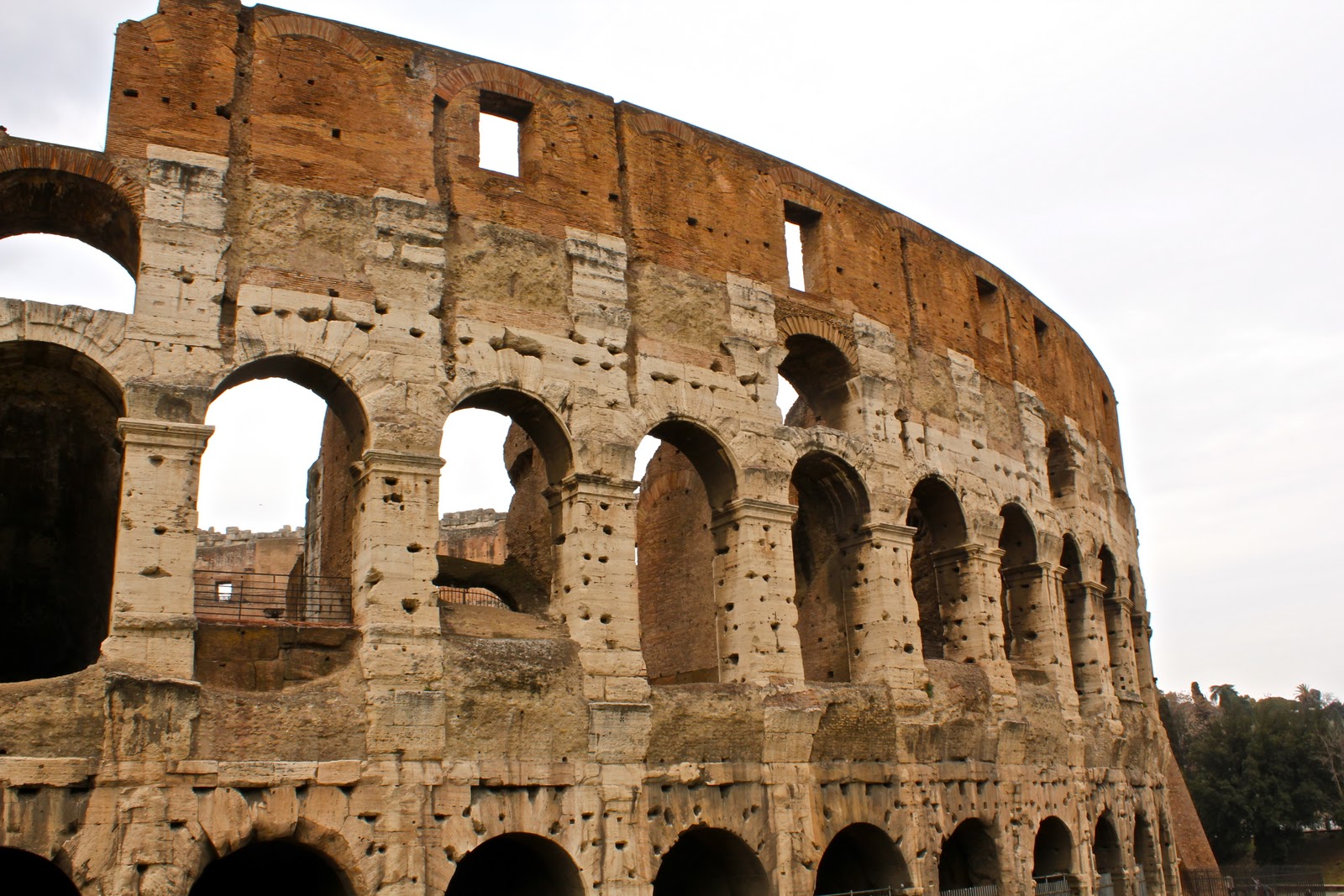
            On Sunday morning, prior to departure, we hoped a tram and headed over to Porta Portese Sunday Market. Porta Portese is one of the largest most diverse and popular flea-markets in Europe. The vendors sell all imaginable merchandise, including antiques, second hand clothes, books, magazines, decorative items and food products. Although I did not purchase anything, it was nice to explore and search for possible hidden treasures. At noontime, we hoped on the buses and participated in a private bus tour of Piazza Venezia, Fori Imperiali, Via Cavour, Piazza Repubblica, Villa Borghese, and Circo Massimo. Although it was difficult to take photos from the inside of the bus, the tour guide proved informational and intriguing. After such a busy weekend it was nice to sit in the comfort of a bus while touring around the large city. The bus tour dropped us off to see our last and final attraction before heading back home to Florence – the Colosseum. We were not only able to tour around the outside of the Colosseum but explore the inside as well. This monumental structure has fallen into ruins, but even today it is an imposing and beautiful sight. Emperors used the Colosseum to entertain the public with free games. Those games were a symbol of prestige and power and they were held for a whole day or even several days in a row. They usually started with comical acts and displays of exotic animals and ended with fights to the death between gladiators. Despite being partially ruined because of damage caused by devastating earthquakes, the Colosseum is an iconic symbol of Imperial Rome.

Colosseum

Colosseum


Colosseum

Colosseum

In Borghese Gardens
St. Peter's Basilica

Outside St. Peter's Basilica

View from Castel Saint'Angelo

St. Peter's Basilica

St. Peter's Basilica

St. Peter's Basilica

View from Castel Saint'Angelo

Inside Castel Saint'Angelo


Piazza Navona

Piazza Navona


Inside the Pantheon

Inside the Pantheon

Pantheon

Trevi Fountain

Trevi Fountain

Trevi Fountain

Trevi Fountain
            The Eternal City offers visitors and residents magnificent ancient monuments, quaint piazzas, incredible museums and gardens, and mouth-watering cuisine. Rome is bursting with entertainment options and never-ending sources of both day and evening activities. After a busy weekend I slept the entire bus ride back home to Florence. Rome is a beautiful city and I hope to return someday soon!

Tuesday, February 15, 2011

Prague, Czech Republic


John Lennon Wall

John Lennon Wall


St. Vitus Cathedral


Inside St. Vitus Cathedral


What a weekend! As some of you may know, I traveled to Prague in the Czech Republic. The weekend spent in beautiful, historic Prague took us north over the Austrian Alps, through Bavaria, and into the Czech Republic. Prague is the capital of the Czech Republic and stands as the center of the Czech state. The trip departed Florence at around 9 PM and we traveled for 12 hours overnight in order to reach Prague by morning. Although it was a long bus ride, I was thankfully able to sleep for the majority of the journey. Upon arrival on Friday morning we checked in to the Czech Inn hostel. The Czech Inn is one of Prague’s best-rated hostels with a modern, chic design. It is a tram/metro ride away from the city center and offered easy access to the main attractions in Prague.
Old Town Square
Astronomical Clock
            Friday morning, after some breakfast and time to freshen up, we met up with one of the best walking tours in the city, Sandemans New Prague Walking Tour. The 3 hour tour covered all the main sites and stories of Prague’s fascinating history. First stop, Old Town Square. Prague’s Old Town Square features various architectural styles including the gothic Tyn Cathedral and baroque St. Nicholas Church. Among the many churches, you can find the Astronomical Clock in this square. It is mounted on the southern wall of Old Town City Hall and is a popular tourist attraction. Our tour guide explained that the clock itself has three main components: the astronomical dial, representing the position of the Sun and Moon in the sky and displaying various astronomical details, and a calendar dial with medallions representing months.
            We then broke for lunch at a restaurant/cafĂ© called Bohemia Bagel. Bohemia Bagel is not just a bagel store; they have the broadest choices of familiar and eclectic bagel sandwiches, plus 10 types of soup and 6 types of desserts. It is one of the most popular lunch destinations and Prague’s favorite bagel shop.
Rudolfinum
Next stop was Prague’s New Town, which is twice as large as Old Town. In the past tradesmen and craftsmen mainly inhabited it; during the 19th century its outer fortification was demolished and redeveloped to its present appearance. Today, however, it is not particularly attractive because of its moderness. We weaved in and out of the streets and ended up in the Jewish Quarter where we learned about the history of the largest Jewish area in Europe. The moving story embraced the traditions, customs and legends of the Jewish people in Prague. The stories unfolded as we explored the synagogues and the cemetery where people were buried up to 12 deep. We also discovered why, despite terrible purges, Adolf Hitler actually wanted to preserve the Jewish Quarter in Prague. This area forms an important part of history of Prague and I gained insight into the life and times of the people who have lived there.
John Lennon Wall
At the end of our tour we landed right near the Charles Bridge, a famous historic bridge that crosses the Vltava River. It connects the Prague Castel and the city’s Old Town as well as adjacent areas. Near the bridge stands the Rudolfinum, one of the most representative Neo-Renaissance buildings in Prague. It was originally designed as an art gallery and then became the seat of the Czech Philharmonic Orchestra. Although time did not allow for us to experience a musical performance, I am sure it would have been outstanding. For the remainder of the day we explored Prague at our own pace and browsed through various shops. Friday night our trip leaders took us out for a night on the town with the Clocktower Bar Crawl, which is one of the biggest bar crawls in Prague! Enjoying the Prague nightlife was definitely an experience!
Prague Castle
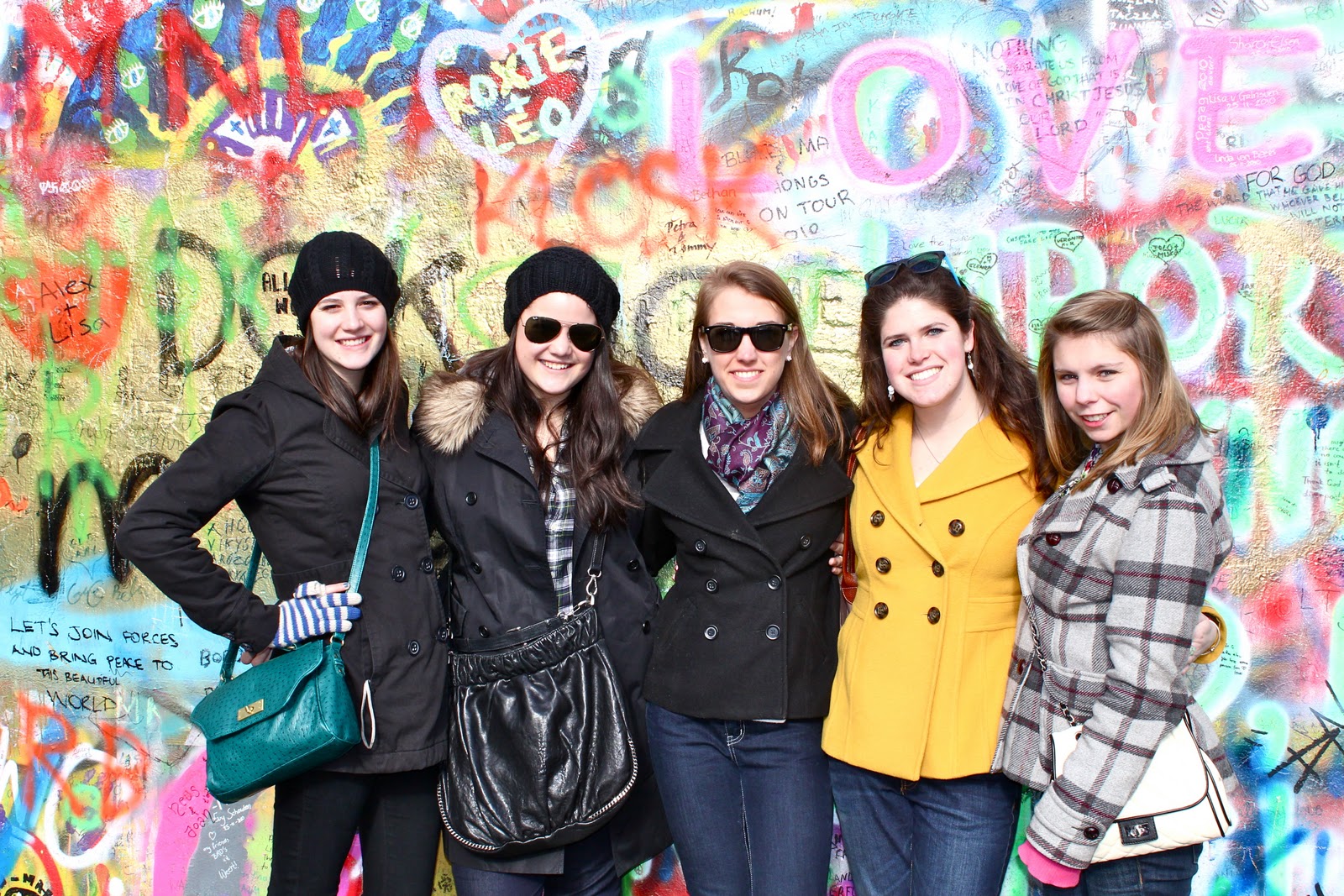
            Saturday morning we met our trip leader who took us to see the John Lennon Wall. The Lennon Wall, once a normal wall, has been filled with John Lennon inspired graffiti and pieces of lyrics from Beatles songs. The wall itself continuously undergoes change and the original portrait of Lennon is long lost under layers of new paint but it was a fascinating modern piece of art that draws various tourist crowds. I couldn’t resist adding my own words to the wall! I wrote: “Krista 2011 Love the Life you Live”. After a quick stop at the Franz Kafka Museum we stumbled upon a waterfront alcove and proceeded to snap photos of the Prague landscape from the river perspective.
Beer Factory
As if those views were not sufficient enough, we hurried along to our Prague Castle tour! The Prague Castle is the largest coherent castle complex in the world! It consists of a large-scale composition of palaces and ecclesiastical buildings of various architectural styles, from Roman-style buildings form the 10th century through Gothic modifications in the 14th century. The walking tour explored the Prague Castle itself and took us to the beautiful Lesser Town (Mala Strana) side of the city, which nestles around the foothills of the castle. Beginning the walk through the grounds, we visited the St. Vitus Cathedral. Interestingly enough, this magnificent structure was the actual coronation and burial place of the once mighty Czech kings. To me, the St. Vitus Cathedral is the very symbol of Prague Castle, however the complex covers much more. We explored the vast area and learned about the fine palaces, ancient churches, viewing towers and other fine buildings. By the end of the tour, we were able to experience the spectacular panoramic view over the whole of Prague! This tour was by far my favorite of all.
St. Vitus Cathedral
At night we met up with the rest of our group at a Beer Factory. It was a basement sports bar that has beer taps on the tables where we could pour our own pint! Later on the entire group headed out to Lucerna, an 80s/90s Video Dance Bar/Club. It was fun to listen to 80s/90s music instead of the typical pop tunes playing in other venues.
Sunday morning we departed for Florence at 11 AM and commenced the 12 hour bus ride! It was good to catch up on some sleep, enjoy some movies, and do a little reading for my classes. Spending the weekend in Prague was like stepping straight into a fairytale. Today Prague is one of the most frequented cities in Europe and I can say I am overly satisfied with my decision to travel here. I had an amazing experience and will recommend exploring this city to anyone!

Saturday, February 5, 2011

San Gimignano, Italy

Today I planned a day trip to visit San Gimignano la citta dale belle Torri! The beautiful town of San Gimignano once enriched with commerce, had 72 towers standing throughout the hilltop town. Nowadays, only 15 towers remain and serve to preserve the medieval fascination. Despite the decrease in the tall stone structures, San Gimignano remains to be a beautiful medieval hill town in the province of Siena, Tuscany. While here we visited the principal museum - the Museo Civico/Pinacoteca and Torre Grossa, which are the Art Gallery and the Great Tower. In the Museo Civico/Pinacoteca you can see various paintings depicting the town in the days when it consisted of warlike skyscrapers (the towers). Above all, climbing the Torre Grossa was my favorite part. The tallest tower in the town, at 54 meters, provided us with splendid views in every direction: the Tuscan hills, dotted with villages, villas and groves of trees.


            After strolling through the narrow cobblestoned streets soaking up the sunshine and enjoying the peaceful silence of the countryside, we stopped in a quaint little restaurant for a quick bite to eat. A bus ride plus an hour train ride later, we were back in Florence satisfied after a successful day trip to a charming destination in the heart of Tuscany. 

Friday, February 4, 2011

Florence, Italy

Fiera del Cioccolato Artigianale

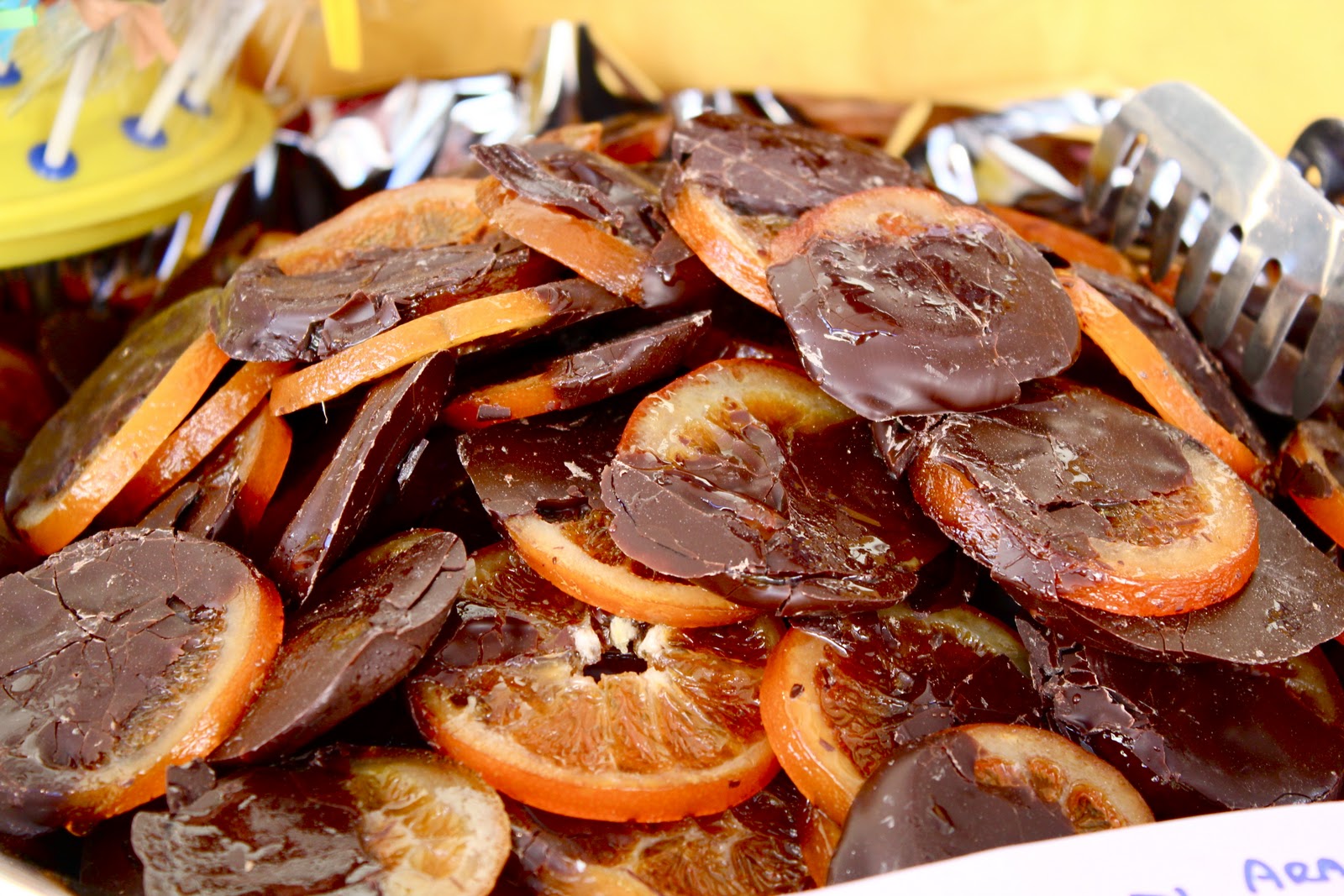
As the first week of classes drew to an end, my roommates and I were excited for our weekend activities! From Friday February 4 – February 13 Florence hosts an exhibition of handmade chocolates and chocolate-based products. Located in Piazza Santa Croce, the Artisan Chocolate Fair draws in chocoholics (like me!) to gaze in awe at the various forms of chocolate masterpieces on display. The many stands of chocolate, and those products that marry well with chocolate, are available for tasting and purchase for those who appreciate the finest cocoa. Not only do the tents of the particular artisanal chocolate producers promote cocoa, the restaurants surrounding the piazza also offered meals based on cocoa. There are also various planned activities during the week such as a happy hour with chocolate-based drinks. Piazza Santa Croce is the perfect place to enjoy a combination of food and art. We were able to combine this trip with a visit to the church of Santa Croce and the famous Pazzi Chapel.
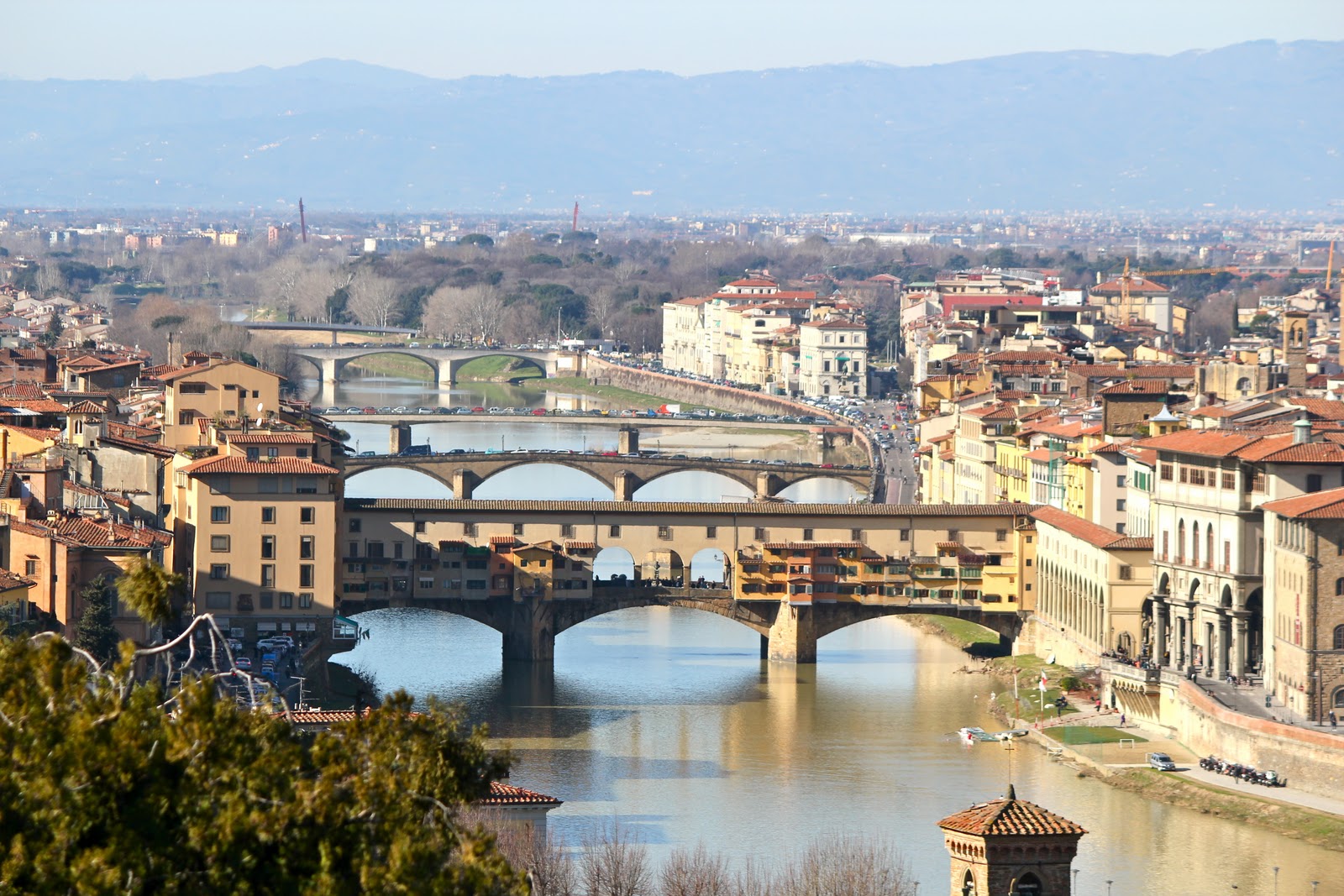
            Next on the schedule for today was a nice walk over to the magnificent Piazzale Michelangelo. Piazzale Michelangelo sits on a hilltop in the Oltrano district of Florence and has perhaps the best panoramic view possible. If you glance left you can see historical landmarks such as the Ponte Vecchio, Palazzo della Signoria, Basilica di Santa Maria del Flore, and the Basilica di Santa Croce. The monument base was designed by Florentine architect Giuseppe Poggi. It now displays copies of Michelangelo’s works, including the David and Medici chapel sculptures from San Lorenzo. Today the piazza is filled with tourists and vendors. People often come here to enjoy the view, and enjoy the view we did! It was great to meander through the city, cross over the Arno, climbing up the winding hilltop and finding ourselves overlooking one of the most picturesque cities in the world. Not only was the sight breathtaking, but the 60 degree and sunny weather made the day complete. 


Arno River

Climbing up to Piazzale Michelangelo


View from Piazzale Michelangelo

View from Piazzale Michelangelo


Wednesday, February 2, 2011

Florence, Italy

This week marked the first full week of classes! Surprisingly, I was beyond excited to actually begin my studies in a foreign country. Although my classes are taught in English, the professors all have thick Italian accents and design the class structure differently than at my home institution. Each of my courses has, on average, about twelve students in the class. This is a change from the fifty to one hundred students that generally make up a typical class at UVM. I enjoy this ratio of students to professor because it will allow me to learn on a different level than I am used to.
            On Monday I have History and Sociology of Modern Consumerism. The course focuses on the rise and development of consumer cultures while applying theoretical approaches to the study of consumer society now and in the past. At two points during the semester we will be taking little “field trips” to a Chocolate Factory and the Costume Gallery of Palazzo Pitti. The trip to the Chocolate Factory is to help us reflect about alternatives to consumerism and to see, in practice, an attempt to restructure the commodity chain of a product. The Costume Gallery will allow us to see a collection that is one of the most important museums of fashion in the world. Over the course of the semester we will be required to compose journals and essays on various topics ranging from considering the ways that my own class background has influenced my feelings about consumption, to following a particular person’s shopping habits throughout the day and reflect on consumption patterns.
            My second class of the day is Italian Food and Culture: Pairing Food and Wine. This is by far my favorite class! The course focuses on the different aspects of regional food in Italy, from ingredients to recipe preparation and cooking techniques. I will also be introduced to the different rules for pairing food and wine. The course will teach me how to look and choose the right wines: understanding their main characteristics and properties, reading different labels, differentiating bottles, and the correct usage of the glasses for serving. Each class includes a hands-on food cooking session and the pairing of a wine to each dish. We are required to take notes on readings and prepare for midterm and final exams which may include individual cooking tests. Included in the course schedule we will travel to a Winery in Chianti, which will include wine and cheese and extra virgin olive oil tasting. Additionally, our professor will bring our class to visit some Florentine Wine shops to learn hints and key rules to remember when purchasing wine. Coming from a family full of “foodies” I am so excited to learn some helpful tricks of my own so I can come home and maybe teach them something!
            Tuesday brings my Global Business and Society course. Out of all the classes I am enrolled in, this one will prove to require the most effort. Specifically, it explores the challenges facing modern corporations in organizing cross border activities. By taking the main economic theories of determinants of international business activities, this class offers a global perspective on long-term change in the world economy and the interaction between countries. We are required to compose an analytical thesis paper on a particular topic, prepare a group presentation, and complete daily assigned readings. Although this may be my most challenging course, I am intrigued to take a business class in Europe that encompasses international aspects rather than my typical finance and economics courses at UVM.
            To end the day I have the required Italian language class. Having already taken one semester of Italian I have a small foundation to build upon. This particular class meets on Tuesdays and then again on Thursdays. My only Wednesday is another History class called The Social World of Renaissance Italy. It was important to me that I take classes that delve into the cultural aspects of Italy and Europe. This particular one satisfies this goal. From the age of communal civilization to the splendor of the Renaissance and beyond, this course explores the main social, cultural and religious developments that defined one of the most intense periods in Italian history. Along with lectures and readings, the class also brings us on a walking tour and site visit of Renaissance Florence next week.
            Each of my classes meets only once a week, other than my Italian language course. This leaves me with ample amounts of free time to explore and learn more about this amazing city that I am able to live in for four months! I plan on utilizing the cafes to complete my readings and writing my papers for all the courses. When the warm weather begins to arrive I hope to find a park bench or sit on the steps of the Duomo to complete any work I have, or even just to people watch.
            I enjoy having a schedule and developing a routine. Along with the start of classes, this week I hope to map out the various trips and excursions I hope to take part in on the long weekends. I will write back later and let you know the details!